Showing posts with label adventure location. Show all posts

Thursday, March 9, 2023

Real History and Geography: Llanos de Moxos and Tepui

Today, some interesting geography and cultures from South America that might have existed in a similar way in Sundaland.

In Bolivia there is a watery plane of hundreds of thousands of square kilometres in size that is flooded for large parts of the year. In this area there are the remains of mounds connected by causeways, raised strips of land, artificial islands and canals. This type of environment might have existed in central Sundaland and a similar culture would fit right in.

Archaeologist Clark Erickson summarized the early Spanish description of Baure villages:

the villages were large by Amazonian standards and were laid out in formal plans which included streets, spacious public plazas, rings of houses, and large central bebederos (communal men's houses). According to the Jesuits, many of these villages were defended through the construction of deep circular moats and wooden palisades enclosing the settlements. Settlements were connected by causeways and canals that enabled year round travel.[27]

As usual I recommend you read the Wikipedia entry to learn more: Llanos de Moxos

Nearby in Venezuela there exist huge tabletop mountains called Tepui which function as ecological islands. These mountains served as the inspiration for the Lost World by Sir Arthur Conan Doyle, in which explorers discover a land of where Dinosaurs still exist. 

Perhaps there exist hidden mountains, valleys and giant caves and sinkholes in what is now Borneo or Papua New Guinea where similar ancient animals, and perhaps other surprises, can still be found?

Thursday, May 19, 2022

Giant Sinkholes

South China is home to giant caves and sinkholes. One recently discovered contains an entire forest cut off from the outside. Scientists believe that it may be home to undiscovered species. 

What kind of creatures do you think you'll find within?


Monday, April 4, 2022

Real History: The Urbanized Jungle: Ancient Maya Garden Cities

This lecture describes what the Maya cities might have looked like and provide me a lot of inspiration as to what some of the cities in Sundaland might look like. I've linked to the relevant 6 minutes of the lecture at the 40 minute mark as that's where the useful information starts, the first section is all about LIDAR technology.

The lecturer described an urbanised rainforest or rainforest garden as a mode of living that's suited to that environment and very different from European or Asian towns and villages in pre-industrial times.


Thursday, October 31, 2019

Adventure Location: Underground Cities

The inhabitants reasoned that since they were going to spend all their days digging into the earth searching for ores and precious stones, they might as well build their homes there. Thousands of them lived in small but comfortable dwellings. Everything necessary for a normal surface life was provided for. Storage rooms, halls to receive traders, a place for their kept animals and cisterns for water. 
I was told that planning had also been put into how to defend the city but of course that would only be necessary if the entrance were to be discovered by their enemies. As you might guess outsiders can only be led to the entrance location when blindfolded.
- An Account of Sundaland by Alom Takal 
Every game needs some underground locations for adventuring and treasure hunting. Personally I never really liked the idea of generic dungeons. Mines and underground homes like Moria are great but an underground complex filled with traps and monsters just as a convenient location for players don't make sense to me, even in fantasy settings.

I need something a little more grounded and luckily there are real world locations that can provide inspiration for adventure locations.

One example is the various underground cities in present dat Turkey. Özkonak for example consists of 10 floors going down 40m and it could hold up to 60,000 inhabitants. It was also connected to another underground city, Kaymakli, underground tunnels 50km away.

Two articles with photos and maps: 

In my research I also learned about huge underground rooms that have been carved out of the rock in Southern China. So far 24 of them have been found around Longyou covering an area of 30 square km. Most likely they were for collecting water but it shows what people were capable digging with comparably primitive tools.


Friday, October 18, 2019

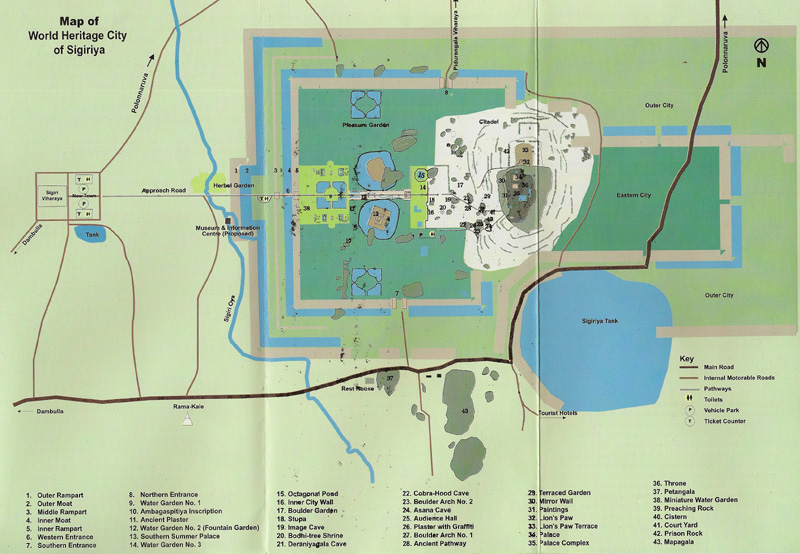
Ancient Rock City of Sigiriya

As we made our way out of the forest and into open fields my eyes were drawn towards the outcrop that was our destination. 
At first its size and scale were hard to judge. But as we approached the city, the walls and buildings below made the enormity of the rock apparent. Above our heads the palace clung to the top like Swallow's nest. It looked impenetrable. 
- An Account of Sundaland by Alom Takal 


Watch the short video for great images of this spectacular location. Find out more here: Wikipedia: Sigiriya and here: Ancient Rock City of Sigiriya.


Map of the area (right click and open in new tab for a closeup view)

Thursday, November 1, 2018

Location: Temple and the surrounding village


I'd like to work on this project simultaneously from both the top down and bottom up directions. That way I can quickly generate usable content and allow for players and a degree of randomness to help generate the world. I can keep certain aspects vague and flesh them out later. Here's a location that can provide a springboard into the Sundaland setting. I'll describe it from the perspective of a local.

This is temple of my people, the centre of our world. My parents tell me that it was built over many generations and one of our most important duties is to see that it is maintained and passed on to our children as it was to us. 

Usually it is only the priests and the elders that are allowed to ascend it, in order to carry out rituals and dream quests so that they may communicate with our ancestors and the gods. Often the priests will go up in the middle of the night to watch the stars. They say that knowledge of the past and future is written in them.

We live in the surrounding area of the forest, our homes built to stand away from the ground, to keep us dry when the rains come. The forest provides us with all that we need, the materials to build our homes and tools, the plants to eat and animals to hunt. There are also dangers to watch out for, ferocious animals that will pull a grown man in to the undergrowth never to be seen again. Some say there are also other dangers, immaterial things from the dream world that will drive a person insane.

I've been told by some of the elders that there are other peoples living as we do, they are several days walk away from us. In the past they made war with us and so we are taught to be weary of any one that doesn't wear the clothing and markings of our people. So far I've never encountered any of these strangers but I will make sure never to leave my spear at home in case they dare come back.

This culture lives in the forested highlands of Sundaland, close to deep jungles. The weather is warm and humid the year round. There are roughly 1500 people living in the forest around the temple subsisting on hunting, foraging, fishing and garden cultivation.

The people are lightly dressed but use special headdresses and bodypainting to distinguish their social position and during cultural events. They have basic technology such as clay pottery and basket weaving. Most tools are made from bone or stone but in the past couple of generations they've acquired basic metallurgy skills (it's not clear if they learned themselves or were taught from outside) and are starting to make metal tools and weapons such as spear points and daggers. There is a shallow open pit mine in one of the nearby hills.

The society is somewhat stratified with elders and priests at the top and the best hunters and fighters having an honoured position as well. There are many cultural events that cover spiritual and communal matters as well as for entertainment and educational purposes.

There is no artisan class but the people make wooden and stone carvings and statues at the request of the elders and priests as well as for their own use. Storytelling and singing is an important part of the culture, a way to pass on knowledge from generation to generation. Some of the priests and elders can write and read symbolic writing system but it is a guarded secret and only taught to those deemed worthy.

Inspiration:

Wikipedia: Olmecs
Wikipedia: Maya Civilization
National Geographic: Amazon Jungle Once Home to Millions More Than Previously Thought
Amazon rainforest was shaped by an ancient hunger for fruits and nuts
Hunter-gatherer populations show humans are hardwired for density