Showing posts with label culture. Show all posts

Tuesday, March 7, 2023

The Gods and Religions of Sundaland

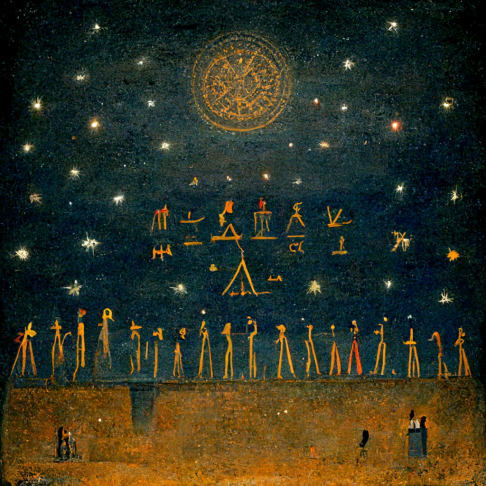
                                                    AI Image generated by Midjourney*

The priests were dizzy and swaying from the plant brew that they had ingested an hour earlier. Now, standing in front of each other, with an obsidian dagger in each of their hands, they were ready to fight to the death. The loser would be the sacrifice that would appease the gods of the rain winds and bring honour on his family and clan. The winner would have to leave the city with his family until the motion of the stars across the sky had completed a full cycle. The circular arena of red stone seated a baying crowd of thousands. They chanted along to the rhythm of their rattles and drums slowly increasing the tempo and volume to a crescendo. Suddenly the high priest-king, from his balcony, dropped a jade encrusted sceptre into the sandy floor below. The combatants lunged at each other, as best they could.

In this post I'll share some tables for learning more about the gods and religions of Sundaland. Use 1d6 if you want to generate random combinations. Many religions will share similar attributes but these tables will help you identify those that are most prominent.

My preference is to have a mixture of these ideas present across the various cultures to give that weird Sword & Sorcery culture shock experience. Embrace the contradictions, it doesn't have to make sense to our 21st century ways of understanding.

Personally, I've never been particularly interested in elaborate religious systems and expansive pantheons of gods in my RPG settings. Similarly to how I think about magic, I believe that by describing this aspect of a setting in systematic detail you remove an element of mystery and wonder. It starts to look like a hierarchical bureaucracy (although some of you may find that fun).

I've written some thoughts on this before and referenced some interesting articles in a previous post which discuss the topic of how people in ancient times really engaged with their religion: Shout Out: Practical Polytheism.

When I use terms such as gods, spirits etc. you can substitute all kinds of things; ancestors, ghosts, demons, beings from other dimensions and realities or even aliens.


Gods, spirits and other supernatural beings are...

1. Social constructs and a figment of people's imagination that are used as part of religion to understand or explain the world and their experiences in it. None of it is real and some people or non-human beings know this.

2. Spirits residing within animate (animals, people) and inanimate objects (tools, weapons, artefacts) or locations of significance such as waterfalls, caves, rivers, strangely shaped rocks etc. They make reality do what it does. Without them water wouldn't be wet, sharp things wouldn't cut and tigers wouldn't hunt deer.

3. Supernatural powers behind natural forces such as typhoons, earthquakes, droughts, volcanoes, wildfires, mudslides and deluges. 

4. Elemental beings associated with fire, water, air, earth and spirit.

5. The supernatural powers behind abstract concepts such as war, peace, commerce, music, bountiful hunting and harvests etc.

6. Aliens or beings from other worlds, dimensions, realms, times or realities (Elder Beings: Truth of the Star Gods).


Gods, spirits and other supernatural beings look like...

1. Normal humans, indistinguishable from ourselves.

2. Humans but exceeding us with far greater physical, mental or spiritual attributes. Or humans with some notable difference. For example unusual skin, eye or hair colours (for example blue skin, red eyes and green hair) or different anatomy such as wings, gills or tails.

3. Animals of Southeast Asia. For inspiration about the animals of Southeast Asia look here: The Fauna and Megafauna of Sundaland and here: Ecology Asia. Examples includes crocodiles, tigers, elephants, monkeys, water-buffalo, banteng, vultures, hyena and various birds, reptiles and amphibians.

4. A combination of animal and human anatomy.

5. Combinations of physical attributes of insects, mammals reptiles, birds, amphibians and invertebrates (which range from from insects and worms to jellyfish and octopuses). 

6. Things that aren't found in our world, universe or reality; Unusual combinations of what we would describe as wings, tentacles, claws, beaks, exoskeletons, multiple eyes, heads and limbs. Or perhaps material or non-material manifestations that the human mind can't even conceive of.


Gods, spirits and other supernatural beings posses abilities such as...

1. Only being able to affect reality in ways that are plausibly explained by natural forces. Earthquakes, mudslides, wildfires, typhoons, volcano outbursts, migrating animals, disease, famine and warfare.

2. Incredible strength, speed, agility, intelligence, bravery, prowess and other recognisable human or animal attributes and skills.

3. The ability to affect the hearts and minds of humans and animals so that it seems as if it was their own natural motivation at work.

4. The ability to affect or warp time and reality, locally or globally, for individuals or masses.

5. Bend the laws of nature such as making water run up hill, creating flames as cold as ice and making heavy things so light they float in the air.

6. Being able to create technology so advanced it could be considered magic when compared to human engineering. The technology harnesses electricity, steam or nuclear power, magnets, acoustics or magical metals. See also: Orichalcum: The Magical Metals of Sundaland


Religion is for...

1. Giving cultures a shared sense of meaning. It makes communities stronger and more resilient but can be used by some to influence or control people's thoughts and behaviour for ulterior motives.

2. Appeasing the gods and spirits to protect people from their malevolent will and destructive power.

3. Learning about other worlds, realms, the present, the past, predetermined or possible futures.

4. Enhancing or developing individuals, either spiritually, mentally or physically.

5. Improving the material wellbeing of people such as by increasing rainfall, healing the sick, improving the results for hunting and fishing expeditions, delivering success in battle or helping to find resources.

6. Protecting the culture from rival groups, natural forces, animals, diseases, beasts and monsters or other gods and supernatural beings.


People can communicate with the gods or spirits by...

1. Taking hallucinogenic substances or entering a trance state through chanting, dancing, singing, meditating or other forms of mental and physical stress.

2. Through dreams, visions, voices in nature or in their head.

3. Contemplating or observing nature for omens such as the movement of birds, tides and weather patterns. Or through astrology by watching the movement of the sun, moon, stars, planets and comets.

4. Casting bones, shell or stones. Inspecting entrails, burning or otherwise destroying particular objects or substances, or speaking with idols and statues.

5. Creating sigils, glyphs and other patterns with coloured sand, paint, woven materials or carvings.

6. By interacting with magical tools or technology created for the culture or that was lost or left behind by the gods, aliens or other beings.


Rituals involve...

1. Solitary practice.

2. Communal experiences.

3. Being led and guided by particular individuals, groups or castes.

4. Travelling to, or ritualistically walking around religious sites.

5. Sacrifices of offerings of some kind; animals, resources, tools, artefacts, opportunities, social standing or anything else of value.

6. Conflict, debate, discussion, competition, combat, games, sports or races.


Everyday religious practice for the average person involves...

1. Praying, meditating, inducing trance states.

2. Chanting, singing, playing musical instruments, dancing or story-telling.

3. Making sacrifices or offerings.

4. Enduring physical, mental or spiritual trials or hardship.

5. Consulting religious figures for advice or asking them to do rituals on their behalf.

6. Observing strict rules that govern every day activities such as interactions between people, cooking food, crafting, hunting, fishing, tending gardens, trade, commerce and resource extraction.


The religions of other cultures are...

1. Simply untrue and safely ignored.

2. True but less powerful and less consequential than our own.

3. Equally true and powerful as our own but deserves no special respect or treatment.

4. Equally true and powerful, should be respected and have as valid a right to exist as our own.

5. Equally true but more powerful than our own. Should be feared and respected.

6. Whether true or untrue, dangerous and must be destroyed.


Two more relevant sets of tables (there are many more in the Content Overview section found in the side bar):

Random Sundaland Culture Generator

Cultural Flavour Tables

*Using AI images on this blog

How do my readers feel about the use of AI / machine learning / algorithm generated images? I'm an artist myself and I understand the rise of this technology will have an impact on all kinds of artists, whether amateur or professional. However all the content on this blog is provided for free and so I do not have a budget to put towards new artwork. I'm open to opinions.

Thursday, September 22, 2022

Elder Beings: Truth of the Star Gods


Legends of the Star Gods: 

When the land was still young they came in their many ships, down from the heavens where they existed first. Here they, whom we call the travellers from the stars, found a forest covered land with abundant fruit and flowers, air filled with the songs of birds, the calls of monkeys, the growling of tigers and the trumpeting of elephants. 

They set out to build high towers and great palaces to make their homes in and recruited the animals to help them in these efforts. The animals were directed to dig into the earth for stone and jewels, and to cut down trees and divert rivers and lakes. And many of the animals were taught to speak so that they could more easily be guided in this work.

It is said that the star-travellers could take the clay from which all creation was fashioned and mould and press it into new shapes as they saw fit. To make small fruits grow large, to make beasts stronger or walk upright where before they were on all fours, to give a snake limbs or to even make a fish breathe air and walk on land.

However even in their wisdom there was disagreement amongst them. First arguments, then conflict and eventually open war; although it is not known why or to what end. Battles raged on mountain tops and in deep caverns. Entire cities were destroyed with terrible magic, and ever more fearsome monstrosities were created with which to chase enemies across open seas and down into deep mines where it was hard for them to reach.

Eventually the wars of the star-travellers ended, but with no ultimate victor or vanquished. The lands were ravaged and our people were there amongst the ruins. In service we had been taught how to carve stone and pour metal. How to sail ships and cast nets. And how to tend forest gardens and herd animals. This is how we managed to survive in the aftermath of so much devastation.

The travellers from the stars left in their ships, for reasons as mysterious as what brought them in the first place. Although it is said some stayed behind guarding in mountain fortresses or still lie resting in tombs in deep caverns. 

Even then there was no peace as the surviving animal servants warred amongst themselves for the inheritance that was left behind. Our people eventually prevailed over all others who then forgot how to speak, or perhaps choose no longer to talk with us because of what we did. Those that refused to submit fled into the forests and swamps, or into the cold mountains and the deep oceans where they plot to one day return and overthrow us.

Since those times we've multiplied, prospered and built new cities, using what we remember from our teachers to honour them, even attempt contact with them and request their return. There are ambitious amongst us who believe there is still yet more to learn from the star-travellers. And that there are to be found in the ruins of those ancient towers, cities and tombs knowledge and artefacts, magic and weapons that can benefit us still. There are even said to be the wrecks of some of their enormous ships situated in the remote parts of the land. Could they be repaired and sailed to the stars to meet their original captains? 

- Unknown Author 


Truth of the Star Gods:

Pick one or create your own truth.

1. The star-travellers are worshipped as gods but do not exist. They form part of or the entirety of the various pantheons of gods that exist in the religions of Sundaland. 

Religions are a collections of memes that are passed down through the generations; providing a survival benefit to societies by increasing group cohesions and codifying cultural knowledge. Some, often less pious, religious leaders are aware of the cultural power they wield and do so consciously. In the same way a great warrior leads an army a religious leader can lead and control believers. 

What kind of knowledge, 'magic' or technology underpins the power and authority of religious leaders? How do they use religion to lead or control believers? What kind of interpretations of the nature of the gods exist and how do they manifest in religions? What kind of different religions exist? How do they interact?

2. The travellers from the stars are gods from outside of time and space that were involved in the creation of the universe or perhaps closely tied to the ultimate creator. They came to earth in order to guide and teach humans and to help them develop civilisation.

The star-travellers are gods worshipped by the people of Sundaland. These gods interact with the world in seen and unseen ways but are capricious in nature and their aims and motives are not fully understood by humans. The people of Sundaland are at the mercy of the gods and do their best to gain their favour through rituals and religion.

What is the intention of these gods? Are they moved purely by self-interest or do they wish to impact humanity, either positively or negatively? Are they the ultimate power in the universe or is there something else out there?

3. The star-travellers are not gods but actually aliens that travelled to earth where they engaged in geo and bio-engineering projects using technology so advanced it seemed like magic. They genetically engineered several species to increase their mental and physical capabilities including the ancestors of humans. Variant human species such as Denisovans might be the result of these experiments or the initial stock that was uplifted. There were also experiments with reptiles, amphibians and newly genetically engineered creatures.

The evidence of the alien presence on earth still exists, albeit in a severely deteriorated state since it occurred thousands of years ago. There are various types of building and structures whose purpose we can not hope to understand as well as ruined cities, underground complexes and even space-ship wrecks to be found in Sundaland.

Where did the aliens come from? Why did they come to earth? What did they want to do here? Why did they fight amongst each other? Why did they leave? Will they come back?

Adventure Ideas: 

1. A newly discovered underground complex, lost city, ruined tower or star-ship wreck has been discovered near a remote village. The authority of your culture wants you to investigate the site and bring back whatever knowledge or artefacts you can find before neighbouring city-states hear about it as well.

Have other cultures learned of the site? How did they find it? Did the gods reveal the location to religious leaders? Are there elder-species (uplifted reptiles, amphibians, mammals) at the location? What can be found at the site?

2. A group of elder-species or elder-humans has reportedly moved into lands near our city-state. The people are fearful of might happen next. What are their motives and desires? Will they instigate violence, consume resources or attempt to live peacefully? The authority of your culture has a particular response in mind and wants you to set their plan into motion.

3. An ancient artefact has been discovered in a mine. It surely belonged to the Star Gods and has been brought to the religious leaders of your culture. However it is unclear what the purpose of the artefact is. Can you help find out what it is? Is it a weapon, a tool, or something else? How is it used? Who else wants it and what do they want to do with it? What are the consequences of its use?

4. Something has been disturbed which should not have been. A deadly disease spreads from an re-opened complex, a piece of technology has been activated and is transforming the land, elder-species have been set free from a hidden city after an earthquake, a star-god has been awakened from a thousand year slumber.

How are the various cultures in the land reacting? How will our way of life be transformed? Can anything be done to put a stop to this? Will our way of life end? Has the apocalypse begun? 


Monday, April 4, 2022

Real History: The Urbanized Jungle: Ancient Maya Garden Cities

This lecture describes what the Maya cities might have looked like and provide me a lot of inspiration as to what some of the cities in Sundaland might look like. I've linked to the relevant 6 minutes of the lecture at the 40 minute mark as that's where the useful information starts, the first section is all about LIDAR technology.

The lecturer described an urbanised rainforest or rainforest garden as a mode of living that's suited to that environment and very different from European or Asian towns and villages in pre-industrial times.


Friday, October 23, 2020

Shout Out: Patrons in King of Kings

I've been following a great new blog about a setting inspired by late Antiquity Persia called King of Kings. The feeling of the setting has many similarities with what I'm trying to achieve with the Sundaland setting. 

Here's a particular interesting article with some tables for generating patrons, people that will give the players missions and quests:

In King of Kings, the characters are outcasts, criminals, paupers, foreigners, and travellers, people that are fundamentally outside of the local social order. There is plenty to explore in the social structures of the Sasanian Empire (which is the main inspiration for King of Kings), but in creating this setting I didn't necessarily want to build in a Skerples-style feudal hierarchy into character creation (though I definitely intend on writing more posts about social hierarchy in late antique Iran in future honestly). Even though I didn't want to establish a structured system for social hierarchy for characters, I did want social hierarchy to matter for the game... so, I concluded that the best way to do both of those things is to have players outside of the social hierarchy, but still make that hierarchy matter, through the player characters having someone that patronizes their activities!

Check out the tables here: Patrons in Kings of Kings

Saturday, October 3, 2020

Cultural Flavour Tables

Here are some tables to help you create more flavour for your cultures. The results of each table are light on details so you have room to flesh things out as you see fit. An easy way to do this is to combine the results you roll here with some of the other tables I've made.

The distinction between some of the sections below is not that important. After all something considered taboo in one culture might be completely normal in another. A folkway for some people could be a mores for another. Further below I've linked to a video that quickly explains the difference between Folkways, Mores, Laws and Taboos.

Status Symbols

How do people show their status within their culture.

1. Personal decoration or clothing.
2. The way people speak to each other.
3. Weapon or tool privileges.
4. Control or ownership of particular resources.
5. Sponsorship or patron.
6. Access or right of way.
7. Mercantile rights or obligations. 
8. Ceremonial rights or obligations.
9. Military rights or obligations.
10. Political rights or obligations.

Personal Decorations

Which aspect of a cultures personal decoration are particularly important, unique or notable. 

1. Tattoos
2. Piercings
3. Scarification
4. Branding
5. Head binding
6. Body paint or makeup.
7. Teeth filing, painting or jewellery.
8. Unique or elaborate hairstyles.
9. Masks
10. Elaborate clothing, headdresses or jewellery.

Religion

Which aspect of the religion is most important.

1. Sacrifice or offerings
2. Honour and praise
3. Pilgrimage
4. Dream or vision questing
5. Trials
6. Charity
7. Asceticism
8. Indulge
9. Meditate
10. Proselytise and convert

Burial

What do people do with the dead.

1. Burial in a pit, grave or tumulus (mound, barrow or kurgan).
2. Cremation
3. Burial at sea, in a lake or river.
4. Exhumed and paraded, place in an ossuary.
5. Mummify, entomb, placed in a catacomb or mausoleum.
6. Sky burial or otherwise left to the elements.

Ceremonies

What is the key feature of their ceremonies.

1. Dancing
2. Hallucinogens
3. Sports or games
4. Theatre
5. Mock battles
6. Chanting
7. Meditation
8. Story telling
9. Singing
10. Drum or music circle

Customs

1. Bring a gift when visiting someone.
2. Arranged marriages with prerequisites.
3. Unusual dowry, dower or bride price.
4. Men and women live separately or in non-familial groupings.
5. Collective child rearing.
6. Holy sites with special rules of behaviour.
7. Disputes can be settled with fines, through combat or competition.
8. Rites of passage through combat, survival, physical or mental tests.
9. Periodically destroy or abandon the home settlement.
10. Particular significance of singing, poetry or storytelling.

Folkways

1. Clap hands to show anger.
2. Speak in a volume appropriate to your status in the family.
3. Avoid showing strong emotions in public.
4. Conversations and interactions between different groups of people follow formal rules.
5. Toast a drink or smoke from a pipe before eating. (Remember tobacco is from the Americas).
6. Spit on the ground for good luck.
7. Always leave a little food left over to indicate to your host that you are full.
8. Youngest or oldest people eat first.
9. Request council or blessing from religious leaders when making important decisions.
10. Honour and face are important to uphold.

Mores

1. Don't kill, harm or hurt particular animals.
2. Don't kill, harm or hurt particular people.
3. Displaying a particular body part to other people such as the soles of your feet is insulting.
4. Share a percentage of your takings (crops, hunts, trade income) with the group.
5. Don't abuse alcohol or drugs.
6. Be grateful for what the forest, river or sea provides.
7. Listen to the guidance of your elders.
8. Treat prisoners or enslaved people with respect.
9. Work hard to benefit others of yourself.
10. Don't imitate people or animals.

Laws

1. Tax on the import or export of particular resources.
2. Ban on a particular resource.
3. Religious freedom.
4. Restrictions or bans on particular religions.
5. Corvée labour (regular compelled labour for the authorities).
6. Ban on slavery or slaves are set free periodically.
7. Certain games can only be played in particular cultural or religious circumstances.
8. 'Skin in the game' laws. E.g. builders must sleep in the building after it's finished.
9. Only certain people are permitted to acquire particular skills. E.g. reading, mathematics, masonry.
10. Ban on debt and usury or debts are periodically cancelled or under particular conditions.

Taboos

1. Against killing, harming or hurting particular animals.
2. Against killing, harming or hurting particular people.
3. Against eating particular plants or animals.
4. Against consuming drugs or alcohol.
5. Allowing yourself to be captured alive during battle.
6. Against anthropophagy.
7. Against public physical contact between members of the same or opposite sex.
8. Against body modification, or conversely not having it done. 
9. Against using or trying to attain magical powers (whether they really exist or not).
10. Against blasphemy, desecration or ignoring religious rules and laws.
 

Tuesday, April 21, 2020

Real History: Who were the Denisovans?


A short video about the Denisovans, an archaic species of human that lived in Southeast Asia and for a while alongside our ancestors (Homo Sapiens Sapiens).


Saturday, October 26, 2019

Hominids: Denisovans and Homo Floresiensis in Sundaland

Note: This a fiction and gaming blog that uses real science as a jumping off point. For those that might have arrived searching for a research paper, nothing I've written on this blog is intended to be taken as anything other than speculative fiction.

There are no Elves or Dwarves in my setting but are there any other species? As far as I know Neanderthals didn't make it down to Southeast Asia but two of our other cousins did.

I stumbled upon an intriguing line in the Wikipedia entry about Denisovans (an extinct type of human).
"Denisovans may have interbred with modern humans in New Guinea as recently as 15,000 years ago."
Here's an article that discusses their existence in Southeast Asia until relatively recently and their possible interactions with Homo Sapiens Sapiens (our direct ancestors) : The Denisovans May Have Been More Than a Single Species
"But a different group of Denisovans lived in Southeast Asia, around what is now Thailand and Vietnam. The third group called the islands of Indonesia home. Those two southern groups diverged from the Siberian Denisovans over 250,000 years ago. That’s before anatomically-modern humans even appeared. And at least one of these groups survived well into the late Pleistocene, dying out just tens of thousands of years ago."
It seems that Denisovans created what is to date the world's oldest jewellery showing skilled crafting of delicate stone including a drilled hole and polishing of the material: Denisovan Bracelet. If Denisovans could create jewellery perhaps they had their own cultures and languages?

An artist impression of a Denisovan and an overview at our current knowledge about the species:
First portrait of mysterious Denisovans drawn from DNA

The other species is Homo Floresiensis (found on what is now the island of Flores), colloquially known as hobbits because of their height. They might have gone extinct 50,000, possibly due to the arrival of Homo Sapiens Sapiens. There is evidence they used stone tools and some scientists believe they used fire for cooking.

I haven't fleshed out any ideas about either of these species but I can definitely see justification for including both species as hunter gatherers with the Denisovans having a more developed Paleolithic level of technology.

Since there is evidence of interbreeding it may be that our ancestors didn't notice major differences between us and Denisovans, but I think it would be interesting to give some thought as to how they behave and think in distinctive ways. Otherwise they are the same as other hunter-gatherers.

Wikipedia: Denisovan
Wikipedia: Homo Floresiensis

Monday, September 30, 2019

Random Sundaland Culture Generator

One of the inspirations for how I'm creating this setting is the sandbox approach of the OSR movement.

I really want people to feel permission to play around in the setting I'm creating. So here's a set of tables to help you generate your own cultures. The descriptions are deliberately concise to give room for your imagination to fill in the details.

Use a 1d6, 1d10 or 1d20 where appropriate. Role multiple times for several results, leave out what you don't like or what conflicts with something else and leave suggestions for more tables.

In some cases I've created the table so that there is a higher chance of rolling certain options to fit with the Bronze to Classical Age Sword & Sorcery feeling that I'm going for. Some of the combinations should be rare to preserve that feeling. I also default to describing everything in terms of city-states or small kingdoms.

Sometimes you'll get results that don't seem like they should go together but try and come up with a story to justify it. After all, ancient societies had strange customs and beliefs that seem contradictory to our current culture.

1. Cultural Archetype (1d10)

What general archetype does this culture belong to? 
  1. New Born
  2. Nomadic
  3. Civilised
  4. Decadent
  5. Civilised
  6. Enlightened
  7. Nomadic
  8. Enlightened
  9. Decadent
  10. Fallen
New Born: This is a young culture that's unrestrained by too many or overly burdensome cultural traditions. People in this culture often behave and act more authentically, some would say impulsively, compared to older more established cultures. They can be brave and decisive but too naive and trusting. They may also be superstitious and ignorant of the wider world but confident in their ability to survive in multiple environments and under harsh circumstances.

Nomadic: Nomadic cultures have no fixed home so instead place great value on bonds such as familial and clan relationships. As free as they are in their movement, they are constricted in their ability to act outside of their traditions. The see the benefits of coming together in larger family, tribe or clan structures but are weary of the trappings of civilisation which they see as leading to weakness.

Civilised: Civilised cultures enjoy both the benefits and drawbacks of living in cities. The term civilised is not meant as a positive judgement contrasting with uncivilised. It is simply a description for a culture mostly living in urban environments. Living in cities allows greater division of labour and specialisation, as well as being exposed to people from different backgrounds. People from these cultures may struggle to survive outside of urban environments. They can be more cynical and individualistic.

Decadent: Corruption has started to eat away at this culture. The luxury, whether material or spiritual, that previous generations attained is now the seed of their future destruction. The foundations are weakening as the rot sets in. This culture is under no illusion as to the dark motivations and impulses that can drive humanity.

Enlightened: This culture views itself as having attained a special knowledge or wisdom compared to others. While this may indeed be the case they will have blindspots about their own limitations. Arrogance and detachment are also afflictions that can beset this culture.

Fallen: Whether due to inside or outside forces this culture is no longer what it once was. The shackles are off and the ensuing chaos is a violent catalyst for change that will burn brightly and quickly. Their towns and cities crumble and decay and they flee into the wilderness or remain behind in the ruins. Perhaps, once the dust has settled and with enough time they will forget their history and become the parents of a New Born culture.

2. Origin Story (1d6)

What is the origin of this culture, or how did they reach their current state?
  1. A wandering tribe. Now settled?
  2. Trace their lineage to a great fallen kingdom.
  3. The gods revealed special knowledge to the people.
  4. Overthrew their oppressors.
  5. Rose up through their own will and deeds.
  6. Brought here by the gods from somewhere else.
3. Rulers (1d10)

Who are the rulers?
  1. Kings and Queens
  2. Priest Caste
  3. Warrior Caste
  4. Merchant Caste
  5. Kings and Queens
  6. Council of Elders
  7. Scholar Caste
  8. Warrior Caste
  9. Priest Caste
  10. Kings and Queens

4. Main Sources of Income + Things The Culture Wants (1d20, roll twice) 

There is some overlap between what could be a culture's source of wealth and things they want to acquire, so I've combined them in one table. However some of these are only applicable as a source of wealth e.g. Raiding and Conquering. If you roll something non-sensical for 'Wants' just roll again.
  1. Elephants and Ivory.
  2. Jade or Obsidian.
  3. Gold or Silver.
  4. Rare spices.
  5. Tin or Copper.
  6. Salt
  7. Jewels
  8. Oils sourced from nuts, plants or animals such as whales.
  9. Artisanal products.
  10. Special stone types for construction such as granite or marble. 
  11. Agriculture or horticulture produce.
  12. Hides, pelts, furs, feathers.
  13. Captured rare animals.
  14. Spoils from raiding or conquering.
  15. Trading hub, toll road, bridge or ferry.
  16. Receiving tax or tribute from neighbours.
  17. A store of wealth or treasury, but running at a deficit.
  18. Weapons.
  19. Common goods such as pottery or non-spoiling food.
  20. Plant resources for medicine or textiles.

5. Motivation (1d6)

What is the general motivation of this culture?
  1. Conquer and dominate.
  2. Facilitate commerce and generate wealth.
  3. Attain spiritual goals or spread their religion.
  4. Develop knowledge and science.
  5. Cultural domination through art, peace and harmony.
  6. Remain insulated and hidden.

6. Anathema (1d6)

What does this culture hate or dislike more than anything else?
  1. Violence
  2. Homogeneity
  3. Diversity
  4. Pacifism or perceived weakness
  5. Decadence or overindulgence
  6. Unbelievers

7. Internal Conflict (1d6)

What is or could soon be the main source of conflict within the culture?
  1. Governing or succession disputes.
  2. Resource misuse, mismanagement or restriction by one of the castes or rulers.
  3. Population or demographic problems caused by wars, famine or disease. For example a lop sided gender ratio or too few children.
  4. A new religion or cult is gaining followers and influence.
  5. A foreign entity is sowing discord amongst a caste or inciting rebellion amongst lower classes.
  6. Corruption and bribery by foreign entities or bureaucratic incompetence and inefficiency.

8. External Threats and Dangers (1d10)

What are or could soon be the external threats and dangers that this culture faces?
  1. Volcanoes
  2. Earthquakes, hurricanes or tsunamis.
  3. Diseases affecting humans, plants or animals.
  4. Flooding from rivers and in later times from the sea.
  5. Aggressive and violent neighbours.
  6. Famine from over-population, soil degradation, loss of productivity or overconsumption.
  7. Plague or pest infestations such as rats or locusts.
  8. Mass delusions or madness.
  9. Fire
  10. Drought

9. Religion (1d6)

To fit the Bronze to Classical Age feeling of my setting it's likely that each culture will have a religion that has some or all of the aspects listed below. So think of the result you roll as the aspect that is most prominent in the culture. Even the Monotheists (as they existed in Bronze Age societies) acknowledge the existence of other gods, just that theirs is the most powerful or uniquely favours them.

The sixth option: Philosophy, could be likened to early Western (Socrates, Plato, Aristotle) or Eastern (Zen, Daoism) traditions. Another inspiration could be Aztec Philosophy. Any philosophical tradition would likely still exist within a framework that acknowledges the existence of gods, spirits and such. Atheism or agnosticism is likely non-existent in this setting.

10. Moral Compass (1d6)

What guides their behaviour towards each other and or outsiders, especially for big decisions? Roll twice if there is a difference between how they treat outsiders compared to their own.
  1. Might makes right.
  2. Discern the will of the gods.
  3. Let fate decide.
  4. Strict rule of law.
  5. Will of the people.
  6. The rulers decide.

11. Preferred method of punishment (1d6)

People in the ancient world could be brutal towards each other or outsiders. Roll twice if there is a difference in their treatment of each.
  1. Heavy fines, imprisonment, forced labour or slavery.
  2. Ritual sacrifice.
  3. Banishment or abandonment to the wilderness.
  4. Quick execution.
  5. Cultural or religious conversion and assimilation through benign or malign means.
  6. Forced to take part in gladiatorial or ritual combat and / or sports.

12. Great Works (1d6)

What are they compelled to build or construct?
  1. Giant statues: Statues like the Moai of Easter Island or even larger.
  2. Pyramids (including step pyramids)
  3. Ziggurats
  4. Mounds
  5. Megaliths: Stone Circles with Henges.
  6. Subterranean complex: Saflieni HypogeumLongyou Caves

13. Prominent Symbol (1d20)

What do they put on their flags, banners, shields and seals?
  1. Lotus or another important flower or plant.
  2. Elephant
  3. Monkey
  4. Crocodile
  5. Sun
  6. Moon
  7. Stars
  8. Tiger or Leopard
  9. Peacock, Vulture, Eagle or other bird.
  10. Hyena
  11. Fish, dolphin, whale or shark.
  12. Bat
  13. Banteng (wild cow)
  14. Babirusa (wild pig)
  15. Badak Jawa (Javan Rhinoceros)
  16. Orangutan
  17. Snake
  18. Tapir
  19. Komodo Dragon
  20. Butterfly
Find specific animal types here: EcologyAsia.com

Example

As an example I rolled: 
  1. Civilised
  2. A wandering tribe: Now settled
  3. Ruled by Kings and Queens.
  4. Tin or Copper, Artisanal Products.
  5. Their motivation is to conquer and dominate.
  6. They dislike decadence or overindulgence.
  7. A new religion or cult is gaining followers and influence.
  8. Aggressive and violent neighbours.
  9. Totemism.
  10. Strict rule of law.
  11. Banishment or abandonment to the wilderness.
  12. Pyramids
  13. Hyena 

Weaving a story around these results I came up with:

A city-state ruled by a queen. They believe they used to be a wandering tribe before an omen convinced them to settle at the foot of a row of hills. Their source of wealth is a tin mine in those hills which is needed for the production of bronze. They do not have skilled artisans but the queen wants beautiful carved totems for the palace and their stepped pyramid so that benevolent spirits will be drawn to inhabit them. 

Their religion advocates personal restraint and this is something they want to convert other cultures to, through any means necessary, although they believe in the strict rule of law for both themselves and outsiders.

There is a new cult growing in influence amongst the common people that advocates for the enjoyment of material things in a world where death and destruction can come suddenly and without warning. If members of higher castes convert to this new religion it could cause internal conflict and rebellion against the queen.

Their main external threat is an aggressive neighbour that wishes to capture the tin mines for themselves so that they increase their weapon production and subjugate other city-states.

If anyone is found to have broken the laws of the city they are banished to the wilderness outside the borders of the state where they are sure to be hunted down by Hyenas. The dangerous animal is the symbol of the city to remind the people of what lies outside the boundaries of civilisation.

Saturday, September 28, 2019

Character Backgrounds for Bronze to Classical Age Settings


It is said that the gods ordered the world such that every living being has its own place and role to fulfil in order to maintain the order of things. From the tigers in the jungle to the fish in the river. 

And so to the men and women of the world must know and fulfil their role whether they be a warrior or a fisher.

However I sometimes wonder if the order of things is really so set and immutable. After all there are many stories told of ancient cities and kingdoms that fell from glory.

Were there kings and queens not in their proper place? Who now can even remember their names? And can not a lowly soldier gain renown on the battlefield and have bestowed upon him land and titles? 

I am a merchant and trader like my father and mother, like their parents before. And so in turn shall I teach my children to sail, explore and seek opportunity. My family has grown in prosperity as each generation built upon the the successes of the past. Who is to say where that can lead to? What is their proper place in the world? 
- An Account of Sundaland by Alom Takal 


The following 24 Bronze Age Backgrounds are from Gundobad's Brazen Backgrounds: Character Backgrounds For Bronze Age Settings, which offers quite a bit more detail for each of these. They are posted here with the author's permission. I highly recommend it. Further below you'll find some of my own with short descriptions.

The one background that is probably not relevant for Sundaland is Charioteer since there are no horses in this setting. But it might give you ideas for other military backgrounds.

Charioteer
Foot Soldier
Brigand / Brigand Hunter
Street Tough
Executioner
Pirate / Raider
Royal Official
Scribal Scholar
Physician
Speaker at the Gate
Priestess / Priest
Cultist
Boater
Sailor
Metalsmith
Skilled Laborer
Manual Laborer
Caravaneer
Wildlander
Barbarian
Poisoner / Taster
Tomb Robber / Burglar
Wastrel
Performer

From my point of view these backgrounds should not necessarily be thought of as jobs, professions or occupations even though I sometimes use those words to describe them. The setting of Sundaland is modelled on Bronze to Classical Age societies which were often highly stratified with formal social casts.

Most people were born into a social position which they stayed in their whole lives unless opportunities arose through social upheaval such as wars, famines or revolutions.

Some of these backgrounds may apply to a single person depending on the culture. A society might be led by Priest Kings and Queens who are religious, political and military leaders. They could be said to have a combination of backgrounds: Noble, Priest, Astronomer and Soldier.

The general population are concerned with providing for their own subsistence through farming, gardening, hunting and fishing. If they produce a surplus they may trade it or be compelled to pay tribute or tax to local leaders.

If they live within the boundaries of a kingdom or city state they may be expected to or forced to work as a labourer, craftsperson or soldier when needed. They may do this unwillingly or they might see it as part of their duty to their society in a dangerous world where people are naturally drawn to band together for protection.

As towns and cities grow, division of labour and specialisation will emerge to the point where some of these backgrounds will indeed become professions, either employed by the elites or (in more developed societies) operating as part of a caste, guild or family business.

As I wrote before, multiple backgrounds might apply to one person and usually it is something they are born into or appointed to. It's not usually the case that someone has a choice in what they want to be when they grow up. If you're born into a merchant family that's usually what you'll become.

I imagine the world of Sundaland being one where social upheaval occurred relatively often. In the same way that all the Mesopotamian and Mayan city-states and kingdoms competed and succeeded each other over the centuries. So there is scope to rise in status and power if that's what you want in your game.

There are obviously going to be backgrounds or situations that lend themselves more towards social mobility and adventures than others, but even the lowliest person can rise in the hierarchy under the right circumstances. For example, starting as a farmer that's conscripted into an army. You prove yourself on the battle field and then become an elite professional warrior. From there you might join an envoy or trading mission to a foreign power and show yourself as worthy of promotion into the bureaucratic or political class, or be given exclusive rights to a trade route of your own and become a wealthy merchant. Other character types might find themselves involved in political or intrigue based scenarios.

Here are some of my own character background ideas:

Architect / Mason: Skilled in the design, planning and building of large structures. May have astrological, astronomical or religious knowledge to guide their designs.

Assassin: Individuals hired to kill opponents without anyone being able to trace back to the one that hired or instructed them.

Astronomer / Astrologer: Observes and tracks the motions of the stars and planets. They are often part scientist, part religious leader. Can keep extensive calendars to predict solstices and eclipses, guide agricultural work or religious ceremonies and festivals.

Burglar / Thief: In larger towns and cities were anonymity increases and social bonds are weaker some are forced steal to survive.

City Guard: Some cities are wealthy enough to afford professional law enforcement. There may be some overlap with a professional army or it might be a separate entity.

Courtesan: The kings and queens have their favourite companions that are not meant to provide heirs.

Elephant Handler: Experts in capturing, taming and riding elephants.

Farmer / Gardener: Most people will have a background in producing food for themselves with any surplus traded or paid towards tax or tribute.

Fletcher / Bowyer: Able to create bows and arrows or other projectile weapons.

Gladiator: Many ancient societies had forms of public competition for entertainment or religious purposes. It could take the form of captured enemies forced to fight each other or animals (Wikipedia: Gladiator), or volunteers for ritualised ball games with deadly consequences for the losers such as the Mayan Ballgame: Wikipedia: Maya Ballgame. Of course Gladiator is the Roman term so come up with a different name.

Mercenary: Perhaps an army from a now destroyed state or a wandering tribe of warriors willing to fight on behalf of others in return for the spoils.

Merchant: Entrepreneurs that know what and where to trade. Many are state officials but there are also independently run family businesses. Like warriors and soldiers have the ability to increase their status through their own efforts if the culture of their society allows it.

Noble / Political Elite: Rulers born in to power and privilege. Their ancestors managed to manoeuvre themselves into leadership positions through might or guile. They're concerned with keeping their position at the top of the pile and passing it on to their heirs. Trained from a young age in martial and political skills.

Potter: Pottery is one of the first types of products civilisations will create for their own use as well as for trade.

Slave: Captured enemies, people that could not pay back a debt or those who were born in to a slave caste. Slaves are used for hard labour in industry, construction, agriculture, gardening and resource extraction such as mining, or put to work in private residencies, military buildings and temples. In some societies slaves may be given their freedom after meeting certain criteria (years of service for example). Other options are escaping or revolting.

Textile Worker / Tanner: Everything to do with turning raw materials in to a form that can be used to create clothing, sandals, shoes, armour or other accessories.


Thursday, December 20, 2018

Cultures: Lemukét


Let me tell you of the time I visited a Lemukét town accompanying a caravan of merchants. Back then I was keen to explore as many corners of Sundaland as I could and readily signed up for work with any company that would provide food and a small part of profit in exchange for my labour or spear.  
I was told that the relations with the Lemukét were friendly and that we were unlikely to find ourselves in any serious danger as long as we stayed in the foreigners' quarter and kept our interactions with the locals limited to the appropriate castes, mostly our counterpart merchants in the designated market place. 
Like many other cultures the Lemukét once had a more glorious past in which their power and influence stretched beyond their traditional homelands. Their rule over others was no better or worse than any other conquerers have ever been. Depending on the particular rulers in power, cruelty or benevolence where to be found in greater or lesser measures. But the eventual downfall of their empire was more due to the nature of their society than the usual invading rivals or slave revolts. 
In the employment of the merchants my duty, besides protection, was to aid our party with the trading of goods. I was to measure out the correct quantities of various spices according to the agreed terms while also being present as a guard, alert and on the look out for quick hands attempting to steal away any of our assets. 
We had set up our stalls in the square in the early morning after we first arrived and welcomed the locals who came to browse, haggle and barter for what we had to offer. While there are various languages spoken across Sundaland there are common words and signs used amongst many people, particularly the traders, merchants and seafarers. However I noticed that the Lemukét traders were not as accommodating to us in this regard as other people were. 
They often misconstrued our meanings which I first attributed to our differing accents and ways of speaking but soon realised was feigned and meant to mock us. Their attitude was that of disdain that we did not speak their words as eloquently as they did and that we did not abide by their intricate social customs which meant we often insulted their sensibilities with every simple sentence and action that was only meant to advance a fair trade. Even looking at the wrong person in the wrong way was taken as a personal affront. This cause our work to take twice as long as necessary while they seemed to gain no benefit other than personal satisfaction at seeing us struggle.
I was allowed to take a pause from the work when the sun was at its highest and the crowds thinned out. Proclaiming I was going to eat and rest, I in fact secretly wished to indulge my curiosity and explore some of the other streets and squares. The engraved wall reliefs and statues of the local temples were famed for their beauty and I was eager to see them with my own eyes. The streets were quiet as most were seeking relief from the midday sun and I presumed my attire, as simple as it was, would not mark me out as a foreigner. I would not draw attention to myself as long as I held my tongue. 
I encountered a beautiful plaza lined with trees, providing shade and cover. In the centre was a small flower garden with a large pool of clear water which I raised to my mouth to quench my thirst. That is when a call came out from a building at the far side of the court and an armed guard came rushing out. I turned around to take flight but there stood another man, face painted bright and menacing, large plumes crowning from a headdress and a spear pointed at my chest. 
They started shouting at me and although I did not understand their words it was clear I had trespassed and they wanted to know who I was. I raised my hands in appeasement and moved by instinct I spoke out in apology. Learning I was a foreigner enraged them and one of the guards struck me hard against the cheek with the back of his hand. I cowered down sure that I was about to be run through by their spears but the guards pulled me up and marched me to the main building where they bound my hands. 
What followed was several days of imprisonment, where I was subjected to the full bureaucracy of the Lemukét legal system. I was moved from building to building where I was paraded in front of what I presumed to be various kinds of courts of elders. Often the discussion between the various officials seemed to be about anything other than my supposed crime. Standing under guard in the corner of a hall discussions and arguments would rage until the sun set without ever questioning or even motioning to me.
Eventually my employers were brought into the proceedings and I was made aware that I was being used as an excuse to dispute the mercantile rights of a particular clan. The various families of the Lemukét being ever involved in political machinations to further their goals would use the convoluted laws of their society as a means to attack and undermine each other. 
That is when I understood why the Lemukét where not able to hold on to their empire. Layers of bureaucracy, social stratification and stifling social customs were a constraint that incentivised the clans to work for short term gain and eschew cooperation for mutual benefit. Their ways were not sustainable on a larger scale and while once in a generation they might be united under strong leadership eventually the squabbling between the various interest groups would cause internal fractures and divisions to their overall detriment.
In any case, my freedom was bought with a fine which came from my expected profit from the venture and I was told to count myself lucky that I did not end up on a stake or in an arena fighting for my life against slaves and beasts. The reason that I was set free with merely a fine being that the two opposing clans did not want to escalate matters further between them for fear it would turn into open violence, the Lemukét on the whole preferring to see that their rivals suffer suspiciously common 'accidents' like drowning in the river after late night walks.
While the Lemukét often send out envoys to other peoples in the hopes of further increasing trade and commerce, and they do have much to offer in terms of resources and artisanal goods, I believe that if they are ever to enjoy more prosperity and have more influence in the lands of Sundaland they must become more welcoming both to strangers and to change as their culture is too rigid to allow the full flourishing of their people. 
For the right price or venture I would travel in those lands again. But I doubt the ways of the Lemukét have changed much in the intervening years so I would make sure to keep to myself as much as I could and get out when the deals are done.
- An Account of Sundaland by Alom Takal 

Wednesday, November 28, 2018

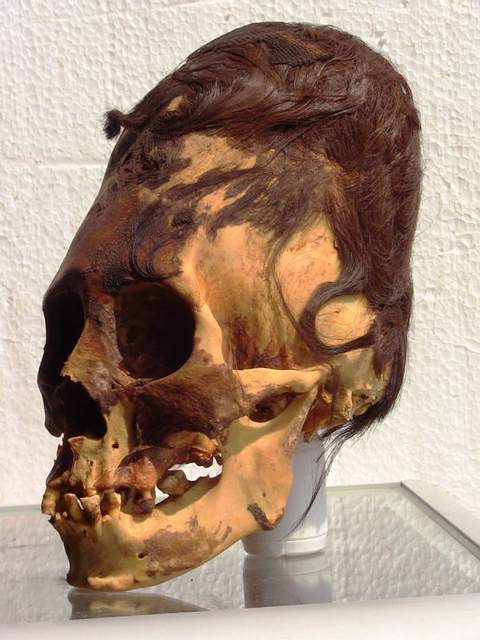
Cultures: The Long Heads


Sundaland is home to many amicable people willing to trade with fairness, eager to exchange knowledge and even provide aid to strangers in times of need. But there are also those that are aggressive and warlike in their disposition. Non more than the Long Head people named for the result of the skull binding they practice on their newborn. 
They call themselves the Ngawar and it is said they practice binding in order to attune their minds better to the communications from their gods. Their deities must be filled with bloodlust because it seems that the Long Heads live only for war and conquest. 
The stories of their assaults on peaceful people are countless and so are the rumours of the grizzly consequences for the prisoners of war they capture. Of course one can not be sure of their truthfulness since so few ever manage to escape their clutches. Slavery and human sacrifice are just the beginning of the horrors they are said to inflict on their victims. I will not repeat what else I have heard of their acts as I feel merely uttering the details somehow defiles my very being.
It is said that they once managed to organise themselves under a great leader and conquered many lands before finally being defeated by a great army of allies. Since then they have mostly been confined to more remote areas of Sundaland often quarrelling amongst themselves. Although not a generation goes by without some warlord gathering a large enough army to lay waste to various nearby cities. The potential for them to organise on a larger scale once again is always present and must surely be prepared for, lest the worst happen again.
In battle they favour no particular weapons, short swords, spears, bows and slings are all used by them. Tactics vary from group to group however it can be said that often individuals chase personal glory even at the expense of their fellows. One characteristic that is quite pervasive is the use of various plant derived medicines to alleviate pain and increase bravery and bloodlust in battle.
They are not entirely devoid of culture but most of their efforts in building monuments and temples are rather crude compared to what is found amongst other peoples. Often they are content to repurpose what they capture from others. Like most in Sundaland they have a keen interest in the motions of the stars, although they are not the most sophisticated in their knowledge of the heavens and ultimately it is just another tool to be used for control of the population by the shamans, priests and warlords.  
- An Account of Sundaland by Alom Takal